Conversations with Artists | Notes from AVA's Curatorial Team

December 10, 2025

AVA's Curatorial team is excited to announce a new email newsletter, "Conversations with Artists." Each month, we'll feature a studio visit and interview with an exhibiting artist, giving you a glimpse inside the mind of an artist and their studio. The series came to light through AVA's former Curatorial Assistant, Emmie Foster, and will continue with our current assistant, Peili Heitzman.

To introduce the series, we have interviewed Sam Eckert, AVA's Exhibition Manager and Curator. Sam is both an artist and a curator. The conversation explores the connection between these two practices, as well as how Eckert approaches curating a show at AVA. In this introductory blog, Eckert will reflect on the 2025 exhibition series.

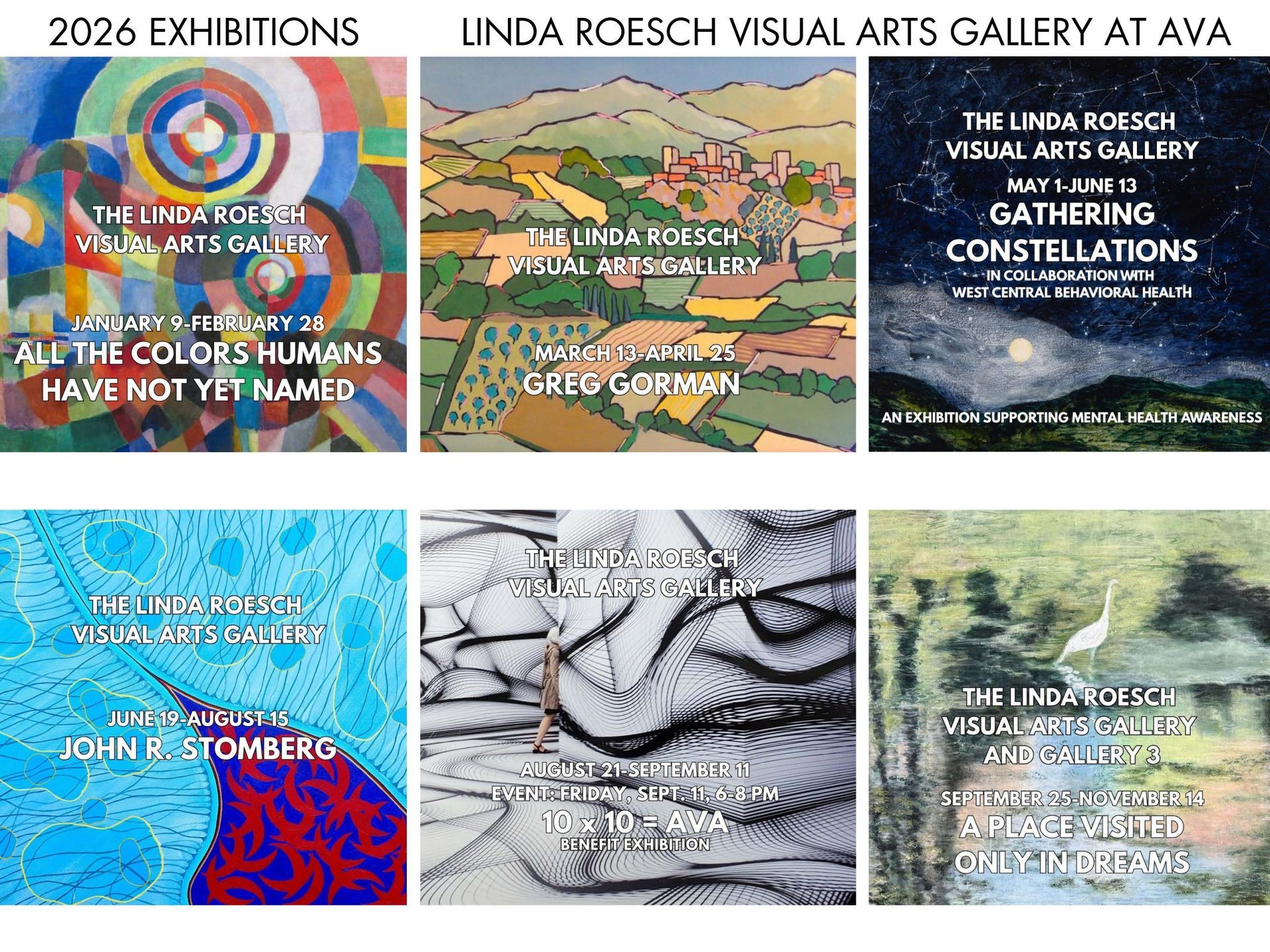
Lastly, we're delighted to announce the 2026 exhibition schedule. You can read a preview of what's happening in the galleries below and find a link to the upcoming exhibitions and events schedule.

Enjoy!

The Interview:

Emmie Foster: Hi Sam, it’s so nice to have the opportunity to chat with you. I guess we’ll start with a question to orient everyone: How did you become a curator?

Samantha Eckert: Well, I started late in my curating career; most people in this field begin much younger. I studied studio and commercial art in undergrad, but it wasn't until my early 40s that I went back to school at the Institute of American Indian Arts for museum studies. After I graduated, I was an adjunct in the Museum Studies Dept. and ran the student gallery. In 2015, I earned my MFA in Visual Arts. So, I have a varied background– heavy in administration and higher ed., combined with coordinating and installing large group exhibitions featuring a wide range of content and media. Incidentally, curating exhibitions might be in my genes: my ancestor, Giuseppe Saverio Mercadante, was an opera composer in the 1800s- so you could make the correlation that musical arrangement is similar to arranging visual art.

EF: What do you see as the primary role of the curator? Do you see a parallel between world-building and curating?

SE: I think a good curator will show off the artwork first and the venue second. For AVA, the primary role is to showcase a broad range of contemporary artists, providing the audience with variety. This could mean artists working with current events or with abstract ideas. Sometimes this pushes comfort zones, but in the goal of generating conversations.

As a curator, your goal is to broaden a visitor’s point of view or say something impactful, whether that be aesthetically, emotionally, politically, or intellectually.

I like to build stories within exhibitions. I guess this is my curatorial voice, poetic in nature. The “stories” are always arranged differently; a story could be about color, shape, or content. Some curators do quite the opposite, arranging things so that there is a change-up and no relationship between each work, which just doesn’t resonate with me. Also, selling art is vital to an artist and to a gallery.

EF: What made you decide to focus on contemporary art? What draws you to it?

SE: I’ve always been drawn to abstract painting, conceptual art, and the Fluxus movement. When I was a kid, I saw a biopic film about the Beatles. There was this scene in the film when John Lennon met Yoko Ono, and he visited the gallery where she showed her piece “Yes”. John climbed up the ladder, picked up the magnifier, and read the word. I remember thinking, “What the heck!", but I couldn’t stop thinking about it. And still do. Now, of course, I think about it as being so powerful and poetic. So, in grad school, this was my focus: to make art that had poetic and meaningful messages. I was making sculptures and installation works using all sorts of materials, from humble household things to personal objects, each chosen to convey something I wanted to say to the audience. I’m drawn to mystery and beauty and the endless search for truth in my own work and in looking at other artists' work.

EF: Being in touch with that inner knowing, or visual sensibility, can be difficult but grows easier over time, as we’ve discussed before. Do you think your curatorial sensibility and the inner knowing you use when making art are the same? Is there a difference between your curatorial and artistic practices? Do they overlap?

SE: They overlap for me for sure. I am always thinking about how I will curate my own work, how I will install it, and what I will need hardware I’ll need, plinths or pedestals, that kind of construction stuff. Curating feeds my art practice; I am constantly learning from other artists, and I think that my art practice lends to curating. As an example, as an artist, I make both discrete objects and immersive installations. We featured a show at AVA in the spring titled Understory, which was thematic in both nature and political stories. I really wanted to feature a large installation in the West gallery, so I invited my friend Marcie Scudder to make a paper sculptural form to stretch across the ceiling. I loved that the piece dipped down and nearly touched the heads of the audience. I think it was the cornerstone of the show; it really nailed the thematic content, but in a subtle way.

EF: I love hearing the direct connection between your art-making and themes for shows here at AVA. Do you consider the audience when you curate a show? What role does the audience play?

SE: I think about AVA’s audience and the broader audience. I know that AVA’s audience appreciates seeing new work from regional artists they know. So, it’s helpful to curate varied time slots: artists in AVA’s network, and some unknown artists.
EF: Is there something you try to communicate to the audience with each show?

SE: That’s an interesting question because many of the shows at AVA are considered “solo shows,” but what I like to do is build a narrative bridge between them so that all the artists showing in one time slot are working together to communicate a broad theme to the audience. For instance, our first show of 2025 spoke about humanity. Mark Lorah’s paintings were visceral, large-scale works that the audience could approach in a bodily way, experiencing them with multiple senses. Cynthia Atwood's fiber sculptures were playful and corporal; the colors, textures, and shapes worked well with Mark’s paintings because his palette and shapes were similar to Cynthia’s sculptures. And also, Mark often uses fabric collaged into his paintings. So, there was a commonality between two seemingly different bodies of work. In the next gallery, Heidi Broner's realist paintings depicted people working. Their body language mimicked the shapes used in both Mark's and Cynthia’s work. In the Mayor gallery, Chris Papa’s sculptures depicted fragmented bodies, pulling the thread of the body, handmade, labor, and (uniquely) human traits. And, that they were made of such interesting materials, he uses manufactured and organic detritus, this idea of materiality was threaded back into Mark and Cynthia's work.

EF: I think that was the first exhibition I worked on with you, and I remember having a similar discussion about the thread between each gallery and body of work.

EF: Do you see yourself continuing to work this way for each time slot? Or what is one vision you have for future shows at AVA?

SE: I’d really like to build more thematic or topical group exhibitions into the schedule for the main galleries. Personally, I love to imagine poetic themes that reflect our culture. I love that AVA can be a soapbox for activism, but in a way that touches people in nuanced ways. Discourse is the word today, right? We need and want to communicate our passions or causes and then hold conversations in a safe space. Art galleries can be the impetus and ideal medium for dialogue, exchange, and change. I think group shows are exciting because they give more artists opportunities to show in the main galleries. Plus, it’s an opportunity to build a larger audience, and that’s our goal: to reach more people.

EF: That’s a great vision! I think AVA has a bright future. Do you have any final parting thoughts or words?

SE: The artist is a cultural producer, the storyteller of this moment in time. Making art is uniquely human; I think society must honor the handmade and advocate for artists by showing up and supporting them for their talent, ideas, ingenuity, labor, and courage. If we lose sight of the importance of art, we risk losing humanity. I know that sounds a bit heavy, but it’s true.

I think there is more opportunity for audience and collector engagement. I have a few ideas, but I’d really like to hear from the audience about what they’d like AVA to offer.
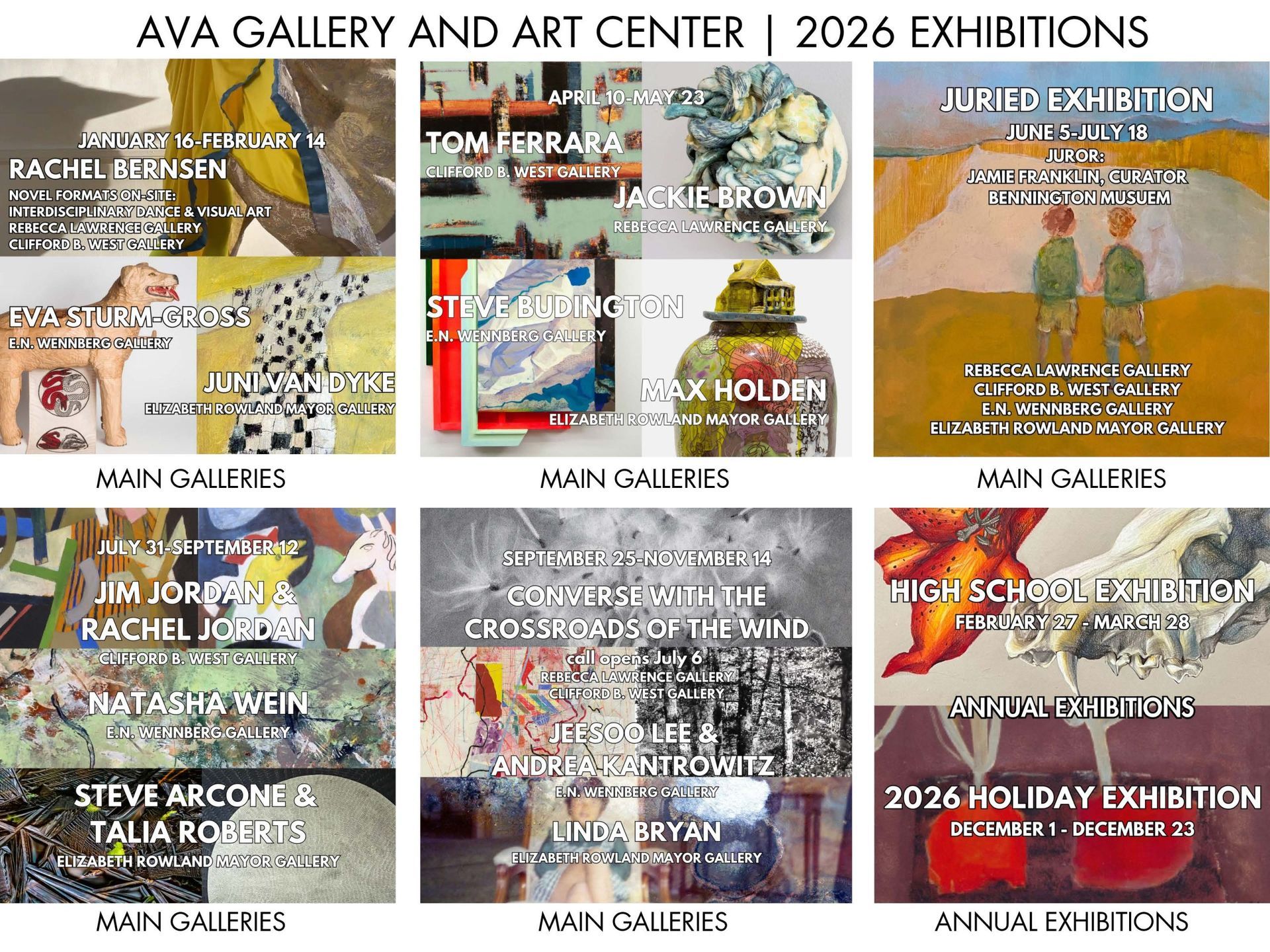
AVA GALLERY | 2026 EXHIBITIONS & PROGRAMMING

The 2026 AVA exhibition schedule is now live! We're excited to announce a range of shows in our main galleries. As always, the shows will feature a range of media - painting, photography, and sculpture. New to this year's programming is a performance and workshop series led by choreographer Rachel Bernsen. For the annual Juried Exhibition, AVA has invited Bennington Museum curator Jamie Franklin. Annual exhibitions featuring work from local high school students and the AVA members' holiday show will anchor the calendar.

Additionally, we're delighted to announce new programming surrounding the exhibitions. A lecture series on topics like outsider artists, comic illustration, and museum theory, and workshops hosted by some of our exhibiting artists.
November 14, 2026
As we ease into the season of giving, we're reflecting on the ways the arts enrich our everyday lives. Some are easy to identify, like a beautifully curated gallery wall or a piece of pottery fresh out of the kiln. Others are less tangible, like the friendships formed in a classroom, the confidence gained from trying something new, or the chance to rediscover your inner child while playing in the studio. Here are five reasons we're especially thankful for the arts this season. 1. The spaces that bring people together Galleries, studios, classrooms, and community art centers offer places to gather, meet people, exchange ideas, and find a sense of belonging. At AVA, we're grateful to provide a space where people of all ages and backgrounds can come together, express themselves, and connect through creativity. 2. The artists who share their creativity with the world From established artists to someone picking up a paintbrush for the first time, we're grateful for the people who bring beauty, curiosity, and fresh perspectives into the world. Art takes countless forms, and we're thankful for those who make room in their lives to create, experiment, and share a little piece of themselves with others. 3. The opportunity to keep learning One of the wonderful things about art is that there's no finish line. No matter your age or experience, there's always a new material to explore, a technique to try, or something unexpected to discover. Art reminds us that we can be beginners at any stage of life, and that learning doesn't always have to be about getting something right. Sometimes, the best part is simply seeing where your curiosity takes you. 4. The way art helps us see things differently Art can challenge our assumptions, spark conversations, preserve stories, and introduce us to experiences outside our own. Sometimes, it gives us a moment to stop and appreciate something we might otherwise overlook. We're grateful for the ways art encourages us to stay curious, consider different perspectives, and see the world through someone else's eyes. 5. The people who support the arts A thriving arts community is made possible by the volunteers, instructors, donors, collectors, families, and visitors who show up and make it all possible. You don't have to be an artist to play an important role in the arts. Whether you're attending an exhibition, taking a class, volunteering your time, purchasing a piece of artwork, or introducing someone to their first creative experience, your participation matters. We're grateful for everyone who helps keep the arts alive and accessible in our community. THANK YOU As we head into Thanksgiving, we're especially grateful for the artists, students, neighbors, and supporters who make AVA the place it is. Every class, exhibition, conversation, and creative experiment adds something to our community, and we're lucky to be part of it. This season, we invite you to think about what the arts have brought into your own life, and perhaps make a little more room for creativity in the months ahead. If you're able to support AVA this season , we appreciate you!
October 30, 2026
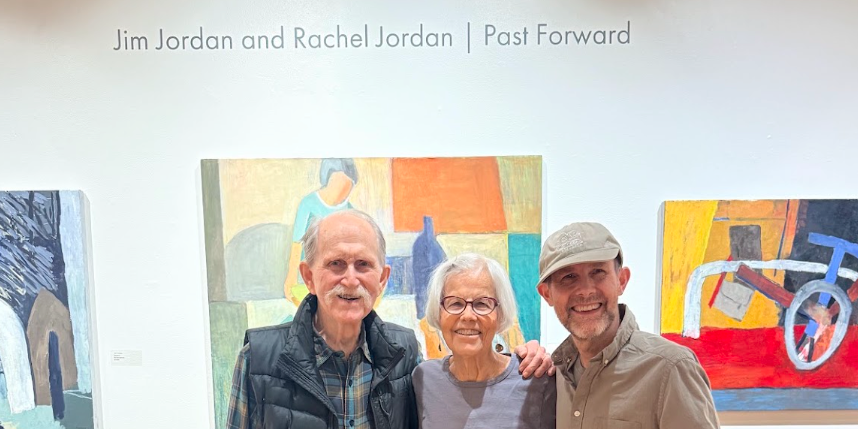
A Family of Artists: Meet Rachel, Jim, and Chris Jordan We were fortunate to host the entire Jordan family this month at AVA! Rachel, Jim, and their son, Chris, are a great example of art as a family affair! But what does that look like in practice? For The Jordans, it's a shared appreciation for art, the creative process, and the experiences that shape the way each of them sees the world. Rather than creating art as a singular unit, Rachel & Jim consider the family to be “three related artists each working separately on their own.” While they don’t share projects, they absolutely share an appreciation for creativity and even some influences! This family is a fine example of including artistic expression as a core family value. Beyond that, they’re impressive creatives, each in their own right. And our favorite reason for working with them is that they’re just really, really great people. We hope you enjoy getting to know them better, and be sure to stop by to see Rachel and Jim’s current exhibition, Past Forward , in our main gallery - on view now through November 14!  A History of Creativity The Jordans’ artistic roots extend well beyond the three of them. Rachel had several visual artists among her relatives on her father's side, while her sister initially studied art before pursuing a career in modern and ballet dance, eventually teaching at Hunter College in New York City. Jim's family also had its share of creative talent, including a sister who was a musical prodigy on piano, a mother who was a talented vocalist, and relatives interested in decorative arts. Both Rachel and Jim demonstrated an early aptitude for drawing and painting. For the Jordans, shared experiences also shaped creativity. As they explained, "All of our trips abroad (and many in the US) have focused on art and architecture." Many were also connected to Jim’s art history work. Their family's tradition of summer camping also helped cultivate a shared appreciation for the visual world of nature. Although each family member developed an individual creative practice, there was a common understanding that art required both imagination and dedication. Hard work, patience, and persistence were recurring values in their approach to their craft. A Family Portrait with Different Perspectives While the Jordans share an appreciation for the arts, they each have their own creative identity and process. Rachel and Jim share a studio and are familiar with each other's painting practices, but they’re also intentional about maintaining their individual creative spaces. As they explained, "We respect each other's privacy while working and only offer critiques on request." The couple’s artistic influences overlap in some areas, particularly their studies of early twentieth-century modernism. Both recognize the influence of Cézanne and the Cubists, including Picasso and Braque. Chris's creative pursuits took a somewhat different direction, spanning both photography and music. His interest in photography began with a home darkroom in the basement and eventually led him to graduate school and a career in higher education. He taught at Sage Colleges before becoming a tenured photography professor at the University of Alabama. In 2021, he published Nowhere in Place , a book featuring his work. Music had also been a consistent part of Chris's creative life. His early interests included trumpet, singing, and electric bass, with his focus shifting between music and photography over the years depending on his surroundings, work, and creative collaborations. Interestingly, the roots of his band, Eleventh-Hour Collective, which recently performed at AVA, could be traced back to high school, when he first played with the guitarist who was now part of the group. When asked whether his parents had ever inspired a song or another piece of art, Chris explained that the influence was often indirect and difficult to pinpoint. "Yes, but indirectly," he shared. "For me, inspiration can be a mysterious process; it's hard to pin down specific connections." He described creativity as a combination of memories, ideas, and associations that could unexpectedly come together in a tangible form. Sometimes, he recognizes familiar melodies, rhythms, shapes, or compositional elements in his work that may have been unconsciously influenced by people or other artists. Chris also shared a wide range of artistic and musical influences. In photography, he particularly enjoyed the work of Minor White and Carl Chiarenza, artists whose approaches to photography explored the sublime through subtlety. He also named Roni Horn, Hiroshi Sugimoto, and Gregory Crewdson among the artists who had influenced him. His musical influences were just as varied, including The Beatles, 1970s Miles Davis, Weather Report, Rush, Kate Bush, and David Bowie. Lessons from Each Other It’s clear that even though Chris has a wide variety of artistic influences, Rachel and Jim have also played a big role in the development of his artistic method. When asked what lessons his parents had taught him about art and life, Chris's answer was simple: patience and practice. "Patience and practice! It's important to learn the materials, methods and language of your craft," he explained. For Chris, developing technical ability is about more than mastering a medium. It’s about learning how to use it to translate inspiration into something tangible and, hopefully, relatable to an audience. He connected this idea to the Zen Buddhist concept of "chop wood, carry water," describing the creative process as something that required consistent effort and everyday practice. "Sometimes there can be dramatic fireworks of inspiration, but most often the process is a slow burn," he said. He saw a similar lesson in life itself, emphasizing the importance of showing up, living well, loving others, and remaining open and vulnerable. As he put it, "Living the day-to-day moments, showing up, living well, loving others, being open, vulnerable, not too armored and protective." It was a philosophy that echoed the values Rachel and Jim also recognized in their own artistic practices. When reflecting on the lessons art had taught them, they shared, "Patience and persistence are probably art's biggest 'life lessons.'" For Chris, the important part of being a creative person was developing the practice and technical skills necessary to be ready when inspiration arrived. He believes those moments can’t be forced. They might come as "a spontaneous gift from the muses, or after long hours of fruitless toil." Either way, the work was in being prepared to recognize and act on them. Favorite Memories For Chris, one of his favorite memories of family creativity went back to childhood and the family's tradition of making Christmas ornaments together. "This one's easier!" he said when asked about a favorite family creativity memory. One year, they cast plaster ornaments of Paris and painted them. Rediscovering those ornaments each year remained something he enjoyed, particularly because of the intricate painting and the family's collection of favorites. Some, he noted, were even a little hilarious. It was a simple tradition, but one that reflected the family's longstanding connection to making art and creating together. While Rachel, Jim, and Chris each follow their own creative paths, their stories shared common threads like having a deep appreciation for the art + the process, a willingness to put in the work to see their visions through, and an openness to be inspired by whatever an appreciation for art and its history, a willingness to put in the work, and an understanding that creativity was shaped by both the people and experiences around them.
By Lars Hasselblad Torres • September 21, 2026
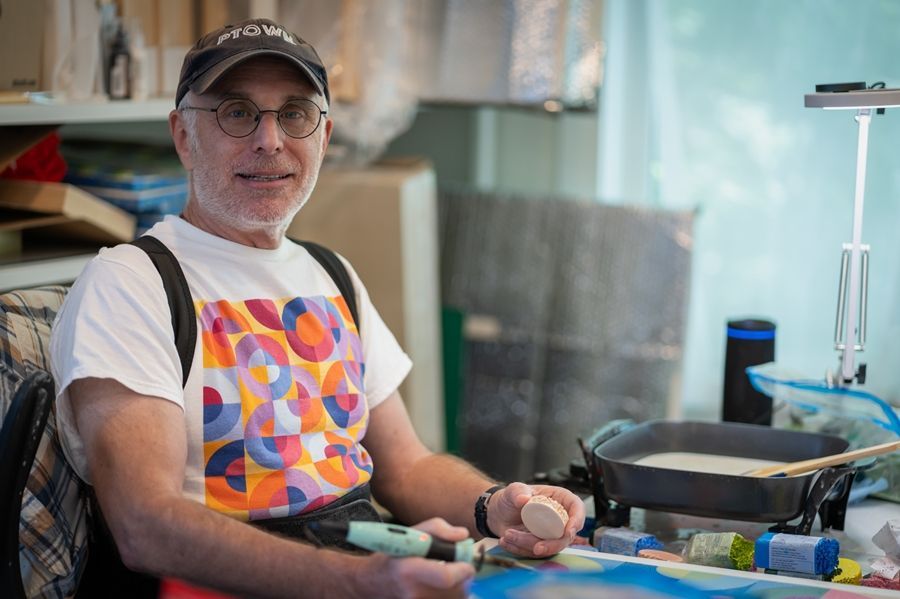
Photo of Ross Ozer in his studio by Jen Zee for the Provincetown Independent (2026)